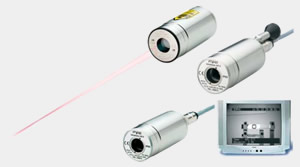
红外测温技术
Non-contact temperature measurement is an optical measurement based on the property of all materials to send out electromagnetic radiation (infrared radiation). The infrared measuring instrument (pyrometer or thermal imager) uses this radiation to determi
The Temperature Range:
Our pyrometers measure temperatures from -40 to 3500 °C. The instruments are available in different temperature ranges. The selection of the temperature range depends on the application.
The Spectral Range
The material of the measured object demands the correct selection of the optimum spectral range of the pyrometer for a certain application. Therefore the correct spectral range is one of the most important features.
Typical spectral ranges are:
| 0.676 µm: | Measurement of molten metals (min. 1100 °C) |
| 0.8 ... 1.1 µm: | Measurement of molten glass, metals, ceramics (min. 600 °C) |
| 1.45 ... 1.8 µm: | Measurement of metals, ceramics (min. 250 °C) |
| 2.0 ... 2.8 µm: | Measurement of metals (min. 75 °C) |
| 3 ... 5 µm | Measurement of metals, ceramics (min. 5 °C) |
| 3.43 µm | Measurement of PE and PP foils (min 50 °C) |
| 3.9 µm | Measurement in flame heated furnaces (min. 75 °C) |
| 5.14 µm: | Measurement of glass surfaces (min. 100 °C) |
| 8 ... 14 µm: | Measurement of non-metal surfaces and coated metals (min. -40 °C) |
Emissivity
The emission coefficient is the relationship of the emission output of an object to the emission output of a black body radiation source at the same temperature. It is influenced by the object's material and changes with the wavelength, the temperature or other physical values.
The emission coefficient of an object is the most important value when determining its temperature with a pyrometer. If one wants to measure the true surface temperature of an object with a pyrometer one must know the emission coefficient, or emissivity, of the object and enter its value in the pyrometric measuring system.
In principle the emissivity of a material is influenced by wavelength, temperature, etc.. Therefore emissivity tables can only give an indication of the exact emissivity for different applications.
A table with emissivities of various materials can be downloaded. (314 KB)
The Field of View
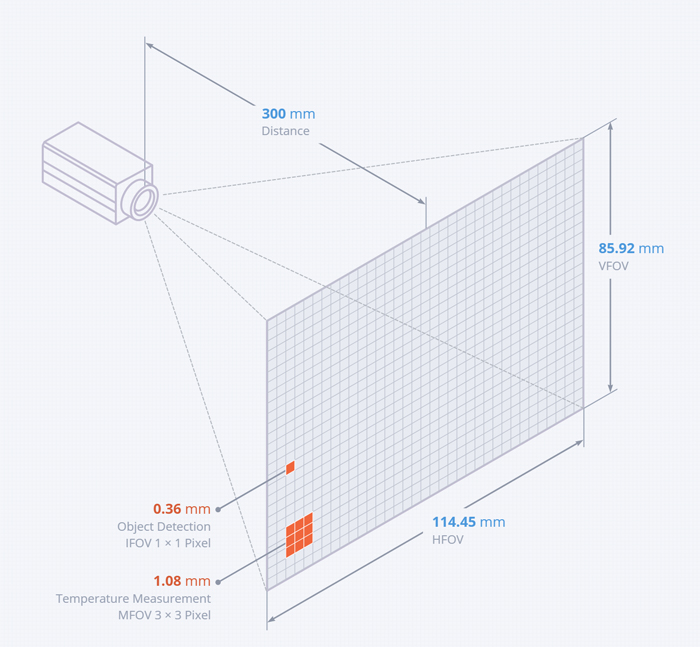
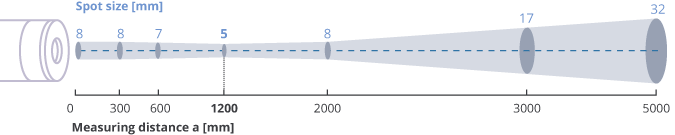
The dimensions of the measured object determine the required spot size of the pyrometer. At least the spot size has to as big as the measured object to achieve a correct temperature measurement. The spot sizes are dependent on the type of pyrometer and measuring distance, they can be calculated using the distance ratio or field of view (FOV).
FOV = measuring distance / spot size
(e.g. 240 : 1 means: in a distance of 1200 mm the spot size is 5 mm).
Example:
Response Time
The response time is the time interval between the instant of an abrupt change in the value of the measuring temperature and the instant from which the measured value of the pyrometer remains within specified limits.
Sighting
For easy alignment of the pyrometers to the measuring object, different sighting systems are available: